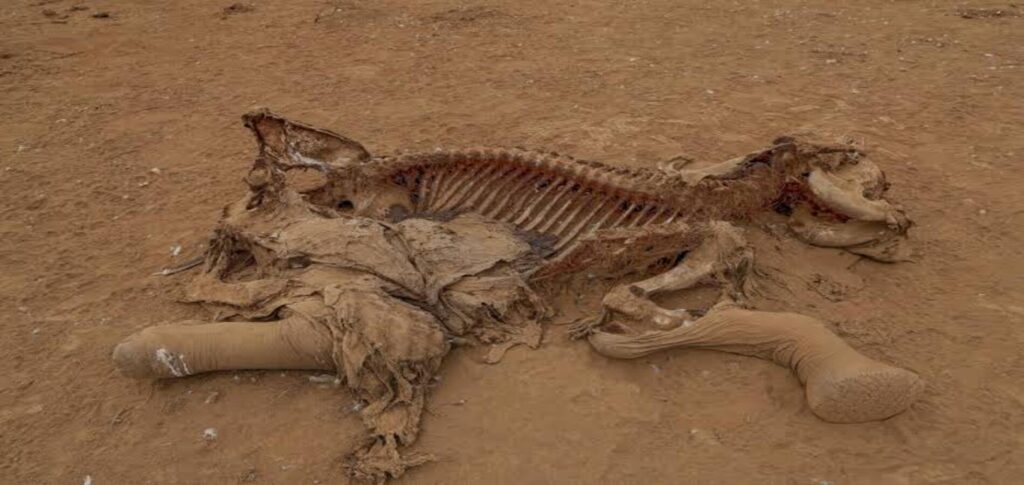
Farmers near Kenya’s Amboseli National Park are disputing claims that cyanide-contaminated tomatoes killed 16 elephants last month.
_x000D_The elephant deaths have sparked an investigation into how cyanide may have entered an area where wildlife and farming communities live side by side.
_x000D_One elephant carcass was found beside a dusty road. Another had been heavily eaten by scavengers.
_x000D_Kenya Wildlife Service officials said preliminary laboratory tests detected cyanide in samples taken from the dead elephants.
_x000D_The animals had also eaten tomatoes and watermelons before they died.
_x000D_ _x000D_Cyanide Poisoning of Elephants Under Investigation
_x000D_Kenya Wildlife Service initially reported that 15 elephants had died within a month. Officials increased the number to 16 on Friday.
_x000D_Veterinary teams found signs of paralysis and breathing difficulties before the animals died.
_x000D_Dr Isaac Lekolool, head of veterinary services at the wildlife agency, said early tests pointed to cyanide poisoning.
_x000D_However, more laboratory work is needed to determine the concentration and identify the source.
_x000D_“We are yet to find out where this cyanide came from,†Lekolool said.
_x000D_The wildlife service has asked Kenya’s Pest Control Products Board to investigate whether the chemical was improperly used, stored or disposed of.
_x000D_Officials are also checking whether water, soil or grass became contaminated.
_x000D_ _x000D_Farmers Reject Claims About Contaminated Tomatoes
_x000D_Farmers living near Amboseli have questioned whether agricultural chemicals caused the elephant deaths.
_x000D_Elvis Muchai has farmed near Kimana for two decades. He said he had never heard of local farmers poisoning wildlife.
_x000D_“We are used to the animals eating from our farms,†Muchai said.
_x000D_Elephants regularly cross the park’s electric fence and enter nearby farms. They often destroy crops during the dry season.
_x000D_Muchai said elephants destroyed about half an acre of his tomato crop last season. He estimated his losses at around 500,000 Kenyan shillings, or about $3,800.
_x000D_Despite these losses, he said local communities have continued to live alongside the animals.
_x000D_ _x000D_Amboseli Farms Face Growing Wildlife Conflict
_x000D_Kimana borders Amboseli National Park and remains one of Kenya’s major agricultural areas.
_x000D_Farmers grow tomatoes, onions and French beans for markets in Nairobi and other parts of the country.
_x000D_As farms expand closer to wildlife habitats, encounters between people and elephants have increased.
_x000D_Kenya’s National Elephant Plan identifies human-wildlife conflict as the second-leading cause of elephant deaths after poaching.
_x000D_Between 2000 and 2020, at least 1,160 elephants died in incidents linked to self-defence or retaliatory killings, according to the plan.
_x000D_However, Duncan Juma, communications director at Kenya Wildlife Service, rejected the idea that human-wildlife conflict caused the latest deaths.
_x000D_He said the local community “loves these animals.â€
_x000D_ _x000D_Farmers Question Cyanide Poisoning Evidence
_x000D_Farmers also question whether commonly used pesticides could have caused the deaths.
_x000D_Muchai said he had never seen or heard of cyanide among the agricultural chemicals sold in the area.
_x000D_He also questioned why other animals appeared unaffected.
_x000D_“We have goats, cows and other wildlife such as gazelles that also feed in these areas,†said another farmer, Rymondy Mrosso.
_x000D_“If the crops were poisoned, why were only the elephants affected?†he asked.
_x000D_Officials said samples from the elephants’ stomach contents have already been tested for toxic chemicals.
_x000D_Blood sample analysis is still underway.
_x000D_Lekolool also rejected earlier suggestions that illegal mining could have introduced cyanide into the park.
_x000D_He said cyanide is regulated in Kenya for mining purposes.
_x000D_ _x000D_Conservation Groups Call for Urgent Action
_x000D_The suspected cyanide poisoning of elephants has also raised concerns among conservation groups.
_x000D_The International Fund for Animal Welfare said the deaths highlight the need to address the causes of human-wildlife conflict.
_x000D_The group said communities must be able to protect their livelihoods while wildlife receives greater protection.
_x000D_Ben Wandago, IFAW’s East Africa director, called for a thorough investigation into the suspected poisoning.
_x000D_He also urged authorities to strengthen controls over highly toxic chemicals.
_x000D_For now, investigators are still working to determine where the cyanide came from and whether contaminated food caused the elephant deaths.
_x000D_ The findings could have wider implications for wildlife protection and farming communities living around Amboseli National Park.