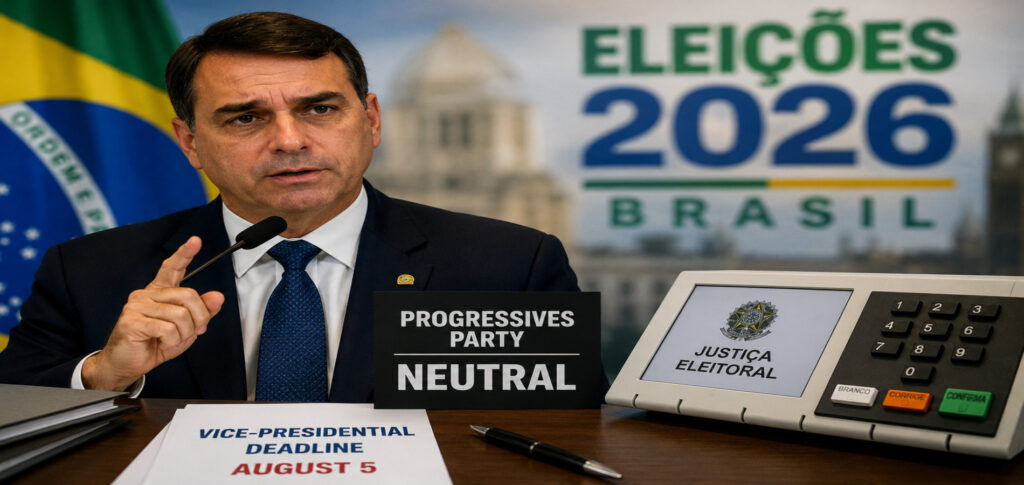
Brazil Presidential Election 2026: Conservative Party Neutrality Deals Blow to Flavio Bolsonaro
_x000D_Brazil’s political landscape shifted significantly after the Progressives Party (PP), one of the country’s largest conservative political groups, announced it will remain neutral in the Brazil presidential election 2026. The decision represents a major setback for Senator Flavio Bolsonaro, who had hoped to strengthen his campaign by securing influential allies before the October vote.
_x000D_The announcement comes at a critical stage of the election campaign, as political parties finalize alliances and presidential candidates prepare their running mates.
_x000D_ _x000D_Progressives Party Declines to Join Bolsonaro Coalition
_x000D_The Progressives Party confirmed it will not officially support any presidential candidate during the upcoming election. As a result, Senator Tereza Cristina, a respected figure within the party, is unlikely to become Flavio Bolsonaro’s vice-presidential candidate.
_x000D_Earlier in the day, Bolsonaro had publicly stated that Cristina had accepted his invitation to join his ticket. However, without formal approval from her party, the partnership cannot move forward under Brazil’s electoral rules.
_x000D_Political analysts believe the party’s decision weakens Bolsonaro’s strategy to expand support beyond his traditional conservative base.
_x000D_ _x000D_Agribusiness Support Remains Uncertain
_x000D_Tereza Cristina has built a strong reputation among Brazil’s agricultural sector and maintains close ties with the influential agribusiness caucus in Congress.
_x000D_Her inclusion on Bolsonaro’s ticket would likely have strengthened his appeal among rural voters and farming communities, two groups that play an important role in national elections.
_x000D_However, with the Progressives Party refusing to form an alliance with Bolsonaro’s Liberal Party (PL), those potential political advantages may not materialize.
_x000D_ _x000D_Bolsonaro Faces Limited Options
_x000D_The neutral position adopted by the Progressives Party is not the only challenge confronting Bolsonaro’s campaign.
_x000D_Another potential coalition partner, the Republican Party, has also shown little interest in formally joining his presidential bid. Political observers say Bolsonaro may now have little choice but to select a running mate from within his own Liberal Party.
_x000D_Brazilian election law requires presidential candidates to officially register their vice-presidential nominee by August 5, leaving limited time for negotiations.
_x000D_ _x000D_Lula Continues to Lead Opinion Polls
_x000D_Current opinion surveys continue to place President Luiz Inácio Lula da Silva ahead of Flavio Bolsonaro in the race for the presidency.
_x000D_Although campaigning is expected to intensify in the coming months, coalition-building remains one of the most important factors that could influence voter confidence before election day.
_x000D_The absence of major political alliances may make it more difficult for Bolsonaro to attract undecided voters outside his core conservative supporters.
_x000D_ _x000D_Why This Decision Matters
_x000D_Political alliances play a central role in Brazilian elections, where support from multiple parties often provides greater access to campaign funding, regional influence, and television advertising time.
_x000D_The Progressives Party’s decision to remain independent signals that some conservative groups are choosing to avoid formally backing a single presidential candidate.
_x000D_While neutrality does not prevent individual politicians from expressing personal support, it reduces the organizational strength that major party endorsements typically provide.
_x000D_ _x000D_Looking Ahead
_x000D_As the Brazil presidential election 2026 approaches, attention will now focus on Bolsonaro’s next move and whether he can build enough political momentum without the backing of larger conservative allies.
_x000D_Meanwhile, President Lula continues campaigning with the advantage of leading national opinion polls, while other parties evaluate their positions before the election officially enters its final phase.
_x000D_With the vice-presidential nomination deadline approaching quickly, the coming days could prove decisive for Bolsonaro’s campaign strategy.
_x000D_ _x000D_Conclusion
_x000D_The Progressives Party’s decision to stay neutral has reshaped the political conversation ahead of the Brazil presidential election 2026. By refusing to formally support Flavio Bolsonaro’s campaign, the party has complicated his efforts to broaden conservative backing and attract key rural voters.
_x000D_ As Brazil moves closer to election day, coalition negotiations and vice-presidential announcements are expected to remain among the biggest stories influencing the country’s political future.