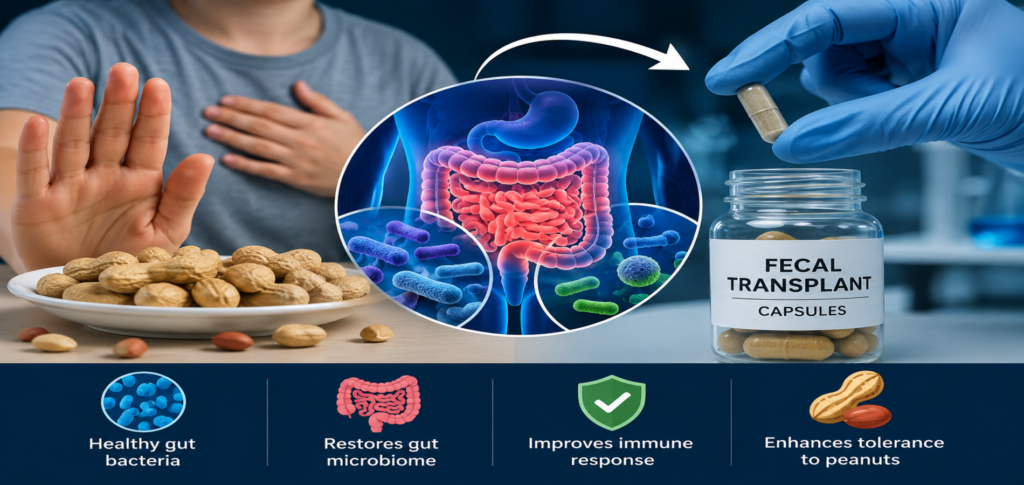
A pilot study suggests that gut bacteria treatment could help some people with severe peanut allergies tolerate larger amounts of peanuts without experiencing an allergic reaction.
_x000D_Researchers tested fecal microbiota transplants, which aim to change the mix of bacteria living in the intestines. The treatment involved 10 young adults with severe peanut allergies who could react to very small traces of peanuts.
_x000D_The participants swallowed frozen capsules containing fecal material from donors with healthy gut microbiomes. After three months, three participants were able to eat several peanuts before developing a reaction.
_x000D_ _x000D_Antibiotics May Improve the Gut Bacteria Treatment
_x000D_Researchers then tested whether antibiotics could help the donor bacteria establish themselves more effectively in the patients’ intestines.
_x000D_Five additional volunteers received antibiotics before undergoing the fecal transplant. Three of them later showed improved peanut tolerance and were able to eat more than four peanuts before experiencing a reaction.
_x000D_The findings suggest that reducing the patients’ existing gut bacteria may allow beneficial bacteria from the transplant to take hold more successfully.
_x000D_ _x000D_How Gut Bacteria May Affect Allergic Reactions
_x000D_Blood tests offered clues about how the treatment might work.
_x000D_People who responded to the therapy showed higher levels of bile salts. These substances help the small intestine process fats and also appear to play a role in the immune system.
_x000D_Researchers found that bacteria introduced through the transplants were better at processing bile salts than some of the bacteria originally found in the participants’ intestines.
_x000D_Additional laboratory experiments suggested that changes in bile-salt processing could increase immune cells that help protect the body against allergic reactions.
_x000D_ _x000D_Larger Studies Are Still Needed
_x000D_Dr. Rima Rachid of Boston Children’s Hospital, who led the study, described the findings as an important step in understanding the connection between gut bacteria, metabolism and food allergies.
_x000D_However, the study was small and early-stage. Researchers say larger clinical trials are needed to determine whether fecal and microbiota transplantation can safely and consistently improve peanut tolerance.
_x000D_Scientists also hope future research will identify the specific beneficial bacteria involved. That could eventually help researchers develop more targeted microbiome-based or probiotic treatments.
_x000D_For now, the findings offer an early indication that gut bacteria treatment could become part of future approaches to severe food allergies, but the therapy remains experimental.