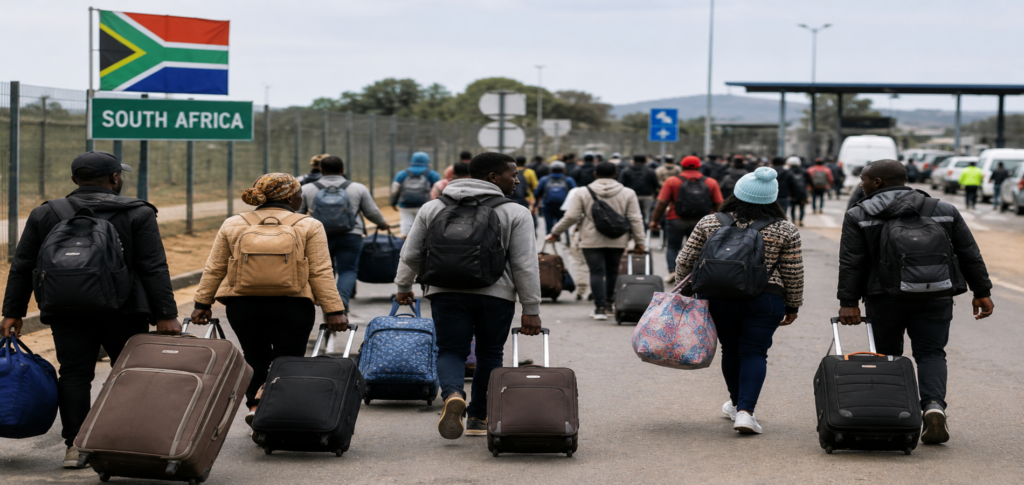
More than 178,000 immigrants have left South Africa in recent months as authorities intensify a crackdown on undocumented migration and anti-immigrant protests continue across the country.
_x000D_The departures represent one of the largest migrant exoduses from South Africa, one of Africa’s biggest economies, in recent years. Some migrants have faced deportation, while many others have chosen to return home through repatriation programmes.
_x000D_Zimbabwe accounts for the largest number of returns. More than 115,000 Zimbabweans have returned home since late May, according to Zimbabwean authorities. Malawi has reported more than 56,000 returns during the same period.
_x000D_Nigeria, Ghana, Mozambique and Lesotho have also reported that more than 1,000 of their citizens have returned from South Africa.
_x000D_ _x000D_Why Are Immigrants Leaving South Africa?
_x000D_The immigrants leaving South Africa are returning for several reasons.
_x000D_South African authorities have stepped up enforcement against undocumented migrants. At the same time, anti-immigration groups have organized protests and campaigns calling for people without legal documents to leave the country.
_x000D_Some migrants have also reported fears of violence.
_x000D_South Africa said it had officially deported about 19,000 people since April. However, the majority of those returning to neighboring countries have reportedly left voluntarily through repatriation programmes.
_x000D_The movement has raised concerns among humanitarian organizations because many families have left suddenly.
_x000D_ _x000D_Anti-Immigrant Protests Increase Pressure
_x000D_Anti-immigrant sentiment has grown in South Africa as unemployment and pressure on public services remain major concerns.
_x000D_Several groups have accused undocumented migrants of taking jobs and placing additional pressure on government services. South Africa has attracted millions of migrants from across the continent over several decades.
_x000D_Many migrants work in agriculture, construction, restaurants and other low-paid sectors.
_x000D_Protests intensified this year and culminated in nationwide demonstrations on June 30. Organizers described the date as a deadline for undocumented migrants to leave the country.
_x000D_Rights groups have also reported door-to-door campaigns in which migrants were allegedly threatened. Some businesses and homes belonging to migrants were reportedly attacked or burned.
_x000D_ _x000D_Violence Creates Diplomatic Tensions
_x000D_The migration crackdown has created tensions between South Africa and several African countries.
_x000D_Mozambique’s government said 11 of its citizens had been killed in attacks in South Africa. Nigeria and Ghana have also reported deaths involving their citizens.
_x000D_South African authorities have disputed some of the claims. Officials said certain deaths were linked to criminal activity rather than anti-immigrant protests. Police are investigating some of the reported killings.
_x000D_The violence has nevertheless prompted accusations of xenophobia and created unusual diplomatic tensions among African nations.
_x000D_Ghana has pushed for discussions about South Africa’s treatment of migrants at the African Union. South Africa opposed placing the issue on the agenda but called for broader discussions about migration across Africa.
_x000D_ _x000D_Children and Families Face Growing Risks
_x000D_The sudden return of migrants has also affected thousands of children.
_x000D_UNICEF and the UN Committee on the Rights of the Child have warned that children involved in sudden and poorly coordinated movements could face violence, exploitation, family separation and psychological distress.
_x000D_Malawi reported that nearly 4,000 children under the age of five were among those who returned from South Africa.
_x000D_A Zimbabwean nonprofit group estimated that more than 11,000 children had returned to Zimbabwe by mid-July.
_x000D_Zimbabwean authorities have instructed schools to accept returning children without discrimination and to help them find places in classrooms.
_x000D_ _x000D_Health Concerns Grow Along the Border
_x000D_Health organizations have raised concerns about migrants leaving South Africa without medicines or medical records.
_x000D_The issue is particularly serious for people receiving HIV treatment or medication for other chronic conditions.
_x000D_Aid groups say some migrants have lost access to essential treatment during their return journeys.
_x000D_Doctors Without Borders, also known as MSF, has established temporary clinic tents at Zimbabwe’s Beitbridge border crossing. The medical teams are treating people affected by the sudden movement, including those who have lost access to regular medication.
_x000D_ _x000D_South Africa Plans to Continue Crackdown
_x000D_South African authorities have indicated that the immigration crackdown will continue.
_x000D_Officials said around 3,000 people were still awaiting deportation at a migrant detention center near Johannesburg. The government has also deployed about 6,300 inspectors to investigate businesses suspected of employing undocumented migrants.
_x000D_President Cyril Ramaphosa has condemned violence against migrants while acknowledging failures in enforcing immigration laws.
_x000D_His government plans to increase border security through new technology and additional personnel. Authorities also plan to establish immigration courts to speed up deportation cases and impose tougher penalties on employers who hire migrants without legal documents.
_x000D_The growing number of immigrants leaving South Africa highlights the increasing pressure surrounding migration, employment and public services across the country. It also raises concerns about the humanitarian consequences for families, children and migrants who depend on regular access to healthcare.