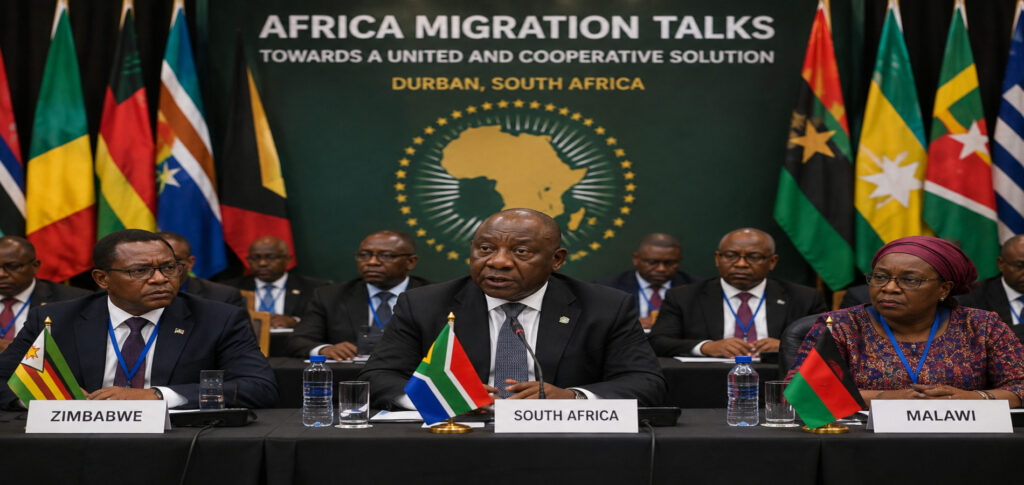
South Africa migration talks are gaining momentum after anti-immigration protests, rising deportations, and diplomatic tensions with neighboring countries. The government says a continent-wide discussion is needed to address the root causes of irregular migration instead of focusing on one nation.
_x000D_Officials believe migration is a shared African challenge that requires cooperation among all member states.
_x000D_ _x000D_South Africa Calls for Broader Migration Talks
_x000D_The South African government wants African leaders to discuss migration at a continental level.
_x000D_International Relations Minister Ronald Lamola said the talks should focus on the factors driving irregular migration across Africa. These include conflict, unemployment, economic hardship, and political instability.
_x000D_He stressed that long-term solutions require cooperation between African countries rather than isolated national responses.
_x000D_ _x000D_Anti-Immigration Protests Increase Pressure
_x000D_The push for South Africa migration talks comes after weeks of protests demanding stronger immigration enforcement.
_x000D_Groups, including the March and March movement, have called for:
_x000D_ _x000D_- _x000D_
- Faster deportations of undocumented migrants _x000D_
- Stronger border security _x000D_
- Stricter enforcement of immigration laws _x000D_
The groups have pledged to continue holding demonstrations every Thursday until their demands are addressed.
_x000D_However, reports of violent attacks against migrants have also raised concern among human rights organizations.
_x000D_ _x000D_African Union Debate Continues
_x000D_Last week, Ghana proposed adding South Africa’s migration tensions to the African Union’s October agenda.
_x000D_However, the proposal was rejected.
_x000D_South Africa argued that migration affects many African countries and should be discussed as a continent-wide issue instead of singling out one nation.
_x000D_Instead, migration is expected to be discussed during the upcoming Southern African Development Community (SADC) summit in Durban later this month.
_x000D_Leaders from Zimbabwe, Mozambique, Malawi, and several neighboring countries are expected to attend.
_x000D_ _x000D_Thousands of Migrants Repatriated
_x000D_Government figures show that around 68,000 people were repatriated between June and July.
_x000D_Many of those returned were from:
_x000D_ _x000D_- _x000D_
- Malawi _x000D_
- Zimbabwe _x000D_
- Mozambique _x000D_
Authorities said most were found living in South Africa without the required legal documents.
_x000D_Meanwhile, South Africa’s Border Management Agency has reduced the capacity of its temporary repatriation center near the Zimbabwe border from 20,000 people to 1,500.
_x000D_ _x000D_Ceuta Crisis Highlights Wider Migration Problem
_x000D_South African officials also pointed to the recent tragedy in Ceuta, where thousands of migrants attempted to cross from Morocco into the Spanish territory.
_x000D_The incident reportedly claimed more than 80 lives and highlighted the growing migration crisis affecting both Africa and Europe.
_x000D_According to the government, events like these show why South Africa migration talks should become part of a wider continental strategy.
_x000D_ _x000D_Regional Cooperation Remains the Goal
_x000D_South Africa says cooperation offers the best chance of managing migration while protecting regional stability.
_x000D_Officials hope future South Africa migration talks within the African Union and regional organizations will improve border management, strengthen legal migration systems, and address the conditions forcing many Africans to leave their home countries.
_x000D_Although disagreements remain, the government believes a coordinated African response is essential for finding lasting solutions to irregular migration.