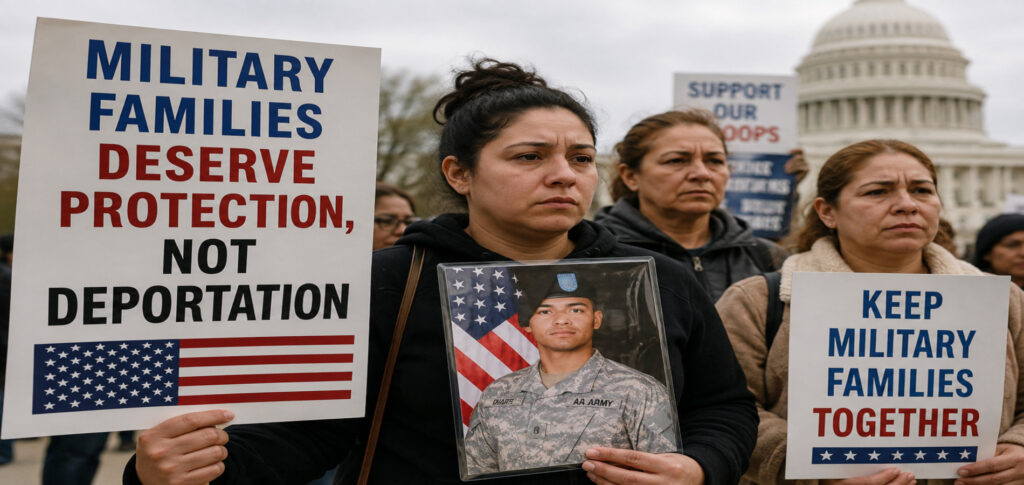
The Trump immigration crackdown military families policy is facing growing criticism after an investigation found that immigration authorities detained dozens of military spouses and parents. Immigration advocates, military experts, and lawmakers say the policy could weaken military readiness. They also warn it places extra pressure on service members serving in the United States and overseas.
_x000D_The investigation found that immigration authorities have detained more than 50 spouses and parents of active-duty military personnel since President Donald Trump returned to office. Officials have already deported at least six family members. Meanwhile, several others remain in federal immigration custody.
_x000D_ _x000D_Military Families Face New Immigration Challenges
_x000D_For decades, both Republican and Democratic administrations avoided deporting close relatives of active-duty troops unless they committed serious crimes. However, the latest Trump immigration crackdown military families policy represents a major change.
_x000D_The Associated Press reported that immigration officials now detain parents and spouses while they try to adjust their legal status through programs created for military families.
_x000D_These legal options still exist. However, long processing delays leave many applicants at risk of detention before officials decide their cases.
_x000D_ _x000D_Detentions Affect Soldiers on Active Duty
_x000D_The policy has created emotional and professional challenges for many service members.
_x000D_Army Sgt. Hedar Leonel Turcios Juarez said immigration officers detained his wife outside a Walmart while their young daughter watched. Consequently, he found it difficult to concentrate on his military duties.
_x000D_Likewise, Army Staff Sgt. Alexis Jaramillo took leave from duty to care for his five-year-old stepson after immigration officials detained his wife during a routine appointment.
_x000D_In another case, an active-duty soldier postponed a scheduled deployment because immigration officers detained her husband. As a result, no one remained to care for their child.
_x000D_Military experts say these situations can directly affect military readiness.
_x000D_ _x000D_Trump Administration Changes Immigration Policy
_x000D_In April 2025, the Department of Homeland Security introduced new guidance. The policy states that military service alone does not protect family members from immigration enforcement.
_x000D_Federal officials argue that immigration laws must apply equally to everyone.
_x000D_The Department of Homeland Security said it respects military service. However, immigration benefits do not automatically shield relatives from deportation if they violate immigration laws.
_x000D_Officials also confirmed that some detainees had previous removal orders or earlier immigration violations.
_x000D_ _x000D_Military Parole-in-Place Faces Longer Delays
_x000D_Military Parole-in-Place remains one of the most important protections for military families. The program allows eligible spouses, parents, and children of service members to apply for legal status without leaving the United States.
_x000D_However, approval times have increased sharply.
_x000D_According to USCIS data, applicants now wait about 12 months for approval. That is more than double previous processing times.
_x000D_Therefore, many applicants remain at risk of immigration enforcement while waiting for decisions.
_x000D_ _x000D_Lawmakers Raise Concerns
_x000D_The increase in detentions has drawn criticism from immigration lawyers and members of Congress.
_x000D_Several Republican lawmakers have publicly supported releasing detained military spouses. They argue that families supporting active-duty troops deserve additional consideration.
_x000D_Military immigration experts also warn that separating service members from their families can reduce morale. Furthermore, it creates unnecessary distractions during deployments.
_x000D_Retired Army Reserve Lieutenant Colonel Margaret Stock said strong family support has always played an important role in maintaining military effectiveness.
_x000D_ _x000D_Recruitment Messages Create Confusion
_x000D_Despite tougher enforcement, military recruiters continue promoting immigration benefits during enlistment campaigns.
_x000D_Some official recruitment materials still state that military service may help eligible family members obtain lawful immigration status.
_x000D_However, critics argue the current enforcement policy sends mixed messages. As a result, many recruits believe protections remain stronger than they actually are.
_x000D_ _x000D_National Security Debate Continues
_x000D_Supporters of stricter immigration enforcement believe authorities should apply immigration laws equally regardless of military connections.
_x000D_Meanwhile, opponents argue that close family members of service personnel deserve greater protection because of the sacrifices military families make.
_x000D_As immigration enforcement expands, the Trump immigration crackdown military families policy is expected to remain a major issue in both immigration and national security debates.
_x000D_For many military families, uncertainty over immigration status continues to create emotional hardship. At the same time, the policy raises broader questions about balancing border security with support for Americans serving in uniform.