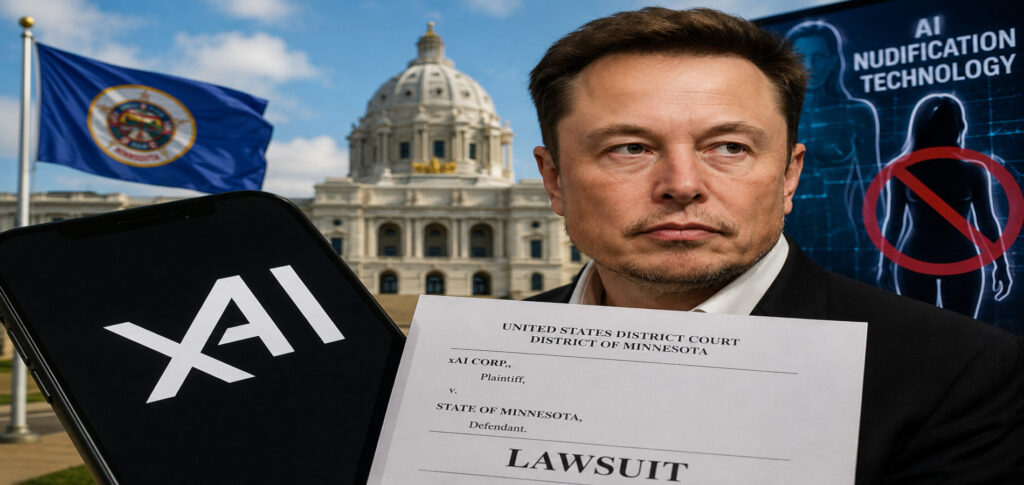
xAI Minnesota Lawsuit Challenges New AI Law
_x000D_xAI Minnesota lawsuit has brought Elon Musk’s artificial intelligence company into a legal battle over Minnesota’s new law targeting AI-powered nudification technology.
_x000D_The lawsuit challenges the first-in-the-nation legislation that bans websites and apps from offering AI tools capable of creating fake nude images of real people.
_x000D_The law is scheduled to take effect on Saturday.
_x000D_ _x000D_xAI Says Minnesota Law Goes Too Far
_x000D_xAI argues that Minnesota’s legislation extends beyond its intended purpose of preventing non-consensual explicit images.
_x000D_The company claims the law also restricts constitutionally protected content and could impose penalties of up to $500,000 per violation.
_x000D_According to the lawsuit, the legislation lacks protections for companies that make genuine efforts to stop users from misusing AI tools.
_x000D_ _x000D_Minnesota Defends the AI Nudification Ban
_x000D_Minnesota Attorney General Keith Ellison defended the new law and said AI-generated nude images can seriously harm victims.
_x000D_He described non-consensual nudification as an attack on personal dignity and rejected suggestions that the legislation unfairly targets technology companies.
_x000D_Ellison said protecting victims remains the state’s top priority.
_x000D_ _x000D_xAI Highlights Existing Safety Measures
_x000D_The company said Grok already prohibits users from creating non-consensual explicit images.
_x000D_Its terms of service ban harmful activities, including generating fake nude images or sexually explicit content involving real people.
_x000D_xAI said it suspends or removes accounts that violate its policies and reports suspected child exploitation material to authorities.
_x000D_The company also introduced geographic restrictions earlier this year to block certain image-editing features where local laws prohibit them.
_x000D_ _x000D_AI Regulation Continues to Expand
_x000D_Minnesota’s law differs from most existing deepfake legislation because it targets AI platforms rather than individual users.
_x000D_Several U.S. states have introduced similar measures, while federal lawmakers recently passed the Take It Down Act to combat AI-generated explicit content.
_x000D_However, courts have issued mixed rulings on AI-related laws, with some judges raising First Amendment concerns.
_x000D_ _x000D_What Comes Next?
_x000D_The xAI Minnesota lawsuit could become a landmark case for AI regulation in the United States.
_x000D_The court’s decision may determine how far states can regulate AI image-generation technology while balancing public safety and constitutional free speech protections.