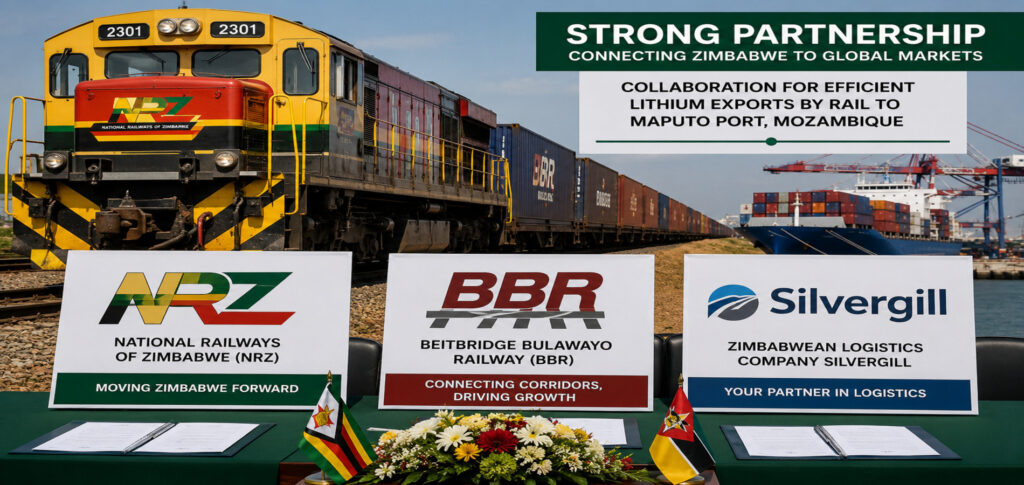
Zimbabwe has taken another step towards strengthening its mining industry by introducing a new rail transport option for lithium exports to Mozambique’s Maputo Port.
_x000D_The move is expected to lower transportation costs, reduce pressure on road networks and improve the efficiency of exporting one of the world’s fastest-growing battery minerals.
_x000D_ _x000D_Rail Partnership Opens New Export Corridor
_x000D_The state-owned National Railways of Zimbabwe (NRZ) announced that it has partnered with Beitbridge Bulawayo Railway (BBR) and Zimbabwean logistics company Silvergill to transport lithium concentrate by rail.
_x000D_The first shipment will carry 1,000 metric tonnes of lithium concentrate from Tsingshan Holding Group’s Gwanda Lithium Mine to Maputo Port in Mozambique.
_x000D_Officials say the new service provides mining companies with an alternative to trucking, which has long been the primary method of moving lithium to export terminals.
_x000D_ _x000D_A More Efficient Transport Network
_x000D_Under the new arrangement, the cargo will first travel around 180 kilometres on the BBR railway from Gwanda to Beitbridge.
_x000D_From there, the National Railways of Zimbabwe network will carry the shipment to the Mozambican border before connecting with the Limpopo railway line, which continues to Maputo Port.
_x000D_The complete rail journey covers approximately 1,000 kilometres, creating a direct logistics corridor from Zimbabwe’s lithium-producing region to one of southern Africa’s busiest ports.
_x000D_ _x000D_Reducing Costs and Bottlenecks
_x000D_For years, Zimbabwe’s lithium producers have depended heavily on road transport, which is more expensive and often affected by traffic congestion, border delays and rising fuel costs.
_x000D_The government hopes the new railway option will ease those challenges while improving the country’s competitiveness in the global lithium market.
_x000D_The NRZ has also been working with private logistics companies to increase freight volumes after years of declining rail activity caused by underinvestment in infrastructure.
_x000D_ _x000D_Growing Demand for Zimbabwe’s Lithium
_x000D_Zimbabwe is Africa’s leading lithium producer and has attracted billions of dollars in investment from Chinese mining companies over the past few years.
_x000D_Major firms, including Tsingshan Holding Group, Zhejiang Huayou Cobalt, Sinomine, Sichuan Yahua and Chengxin Lithium, have invested heavily in mines and processing facilities across the country.
_x000D_In 2025, Zimbabwe exported more than 1.13 million tonnes of lithium-bearing spodumene concentrate to China, supplying a significant share of the country’s lithium imports.
_x000D_Looking ahead, Zimbabwe is encouraging more local processing of lithium instead of exporting raw materials. Industry forecasts suggest exports of lithium sulphate, a key ingredient used to produce battery-grade lithium chemicals, could reach 344,000 tonnes annually by 2030 as the country’s processing capacity continues to expand.
_x000D_ _x000D_