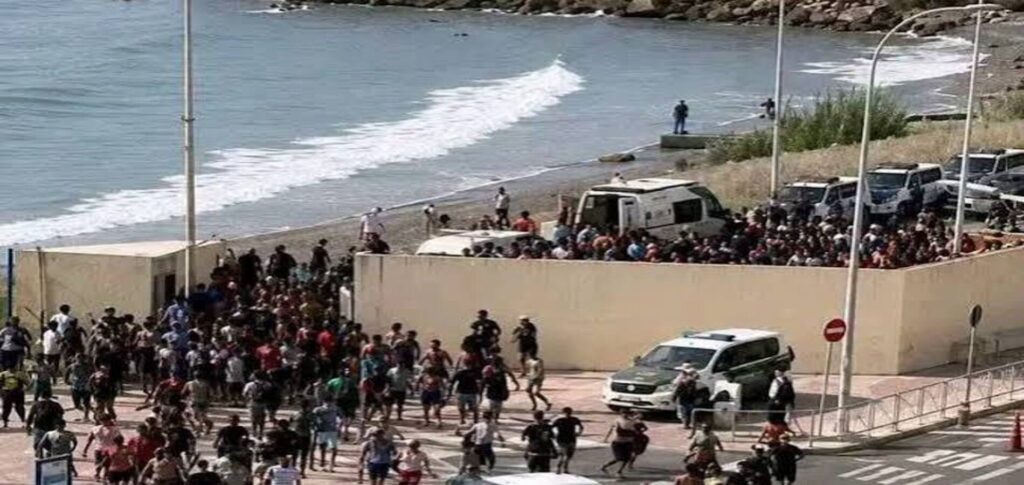
The Ceuta migrant deal between Spain and Morocco aims to speed up the return of illegal migrants after thousands crossed into the Spanish enclave. The surge has created a growing humanitarian and border security crisis.
_x000D_ _x000D_Ceuta Migrant Deal Aims to Ease Border Pressure
_x000D_Spanish and Moroccan officials agreed to strengthen cooperation. They also agreed to speed up the return of migrants who entered Ceuta illegally.
_x000D_Both governments say the agreement will help restore order along one of Europe’s busiest migration routes. However, officials have not announced a timeline for implementing the new measures.
_x000D_Prime Minister Pedro Sánchez said Spain is committed to responding quickly. He added that his government will continue working closely with Moroccan authorities.
_x000D_ _x000D_Growing Humanitarian Challenge
_x000D_Local officials say about 300 migrants have reached Ceuta by sea each day in recent weeks.
_x000D_Most arrivals are young men, but women and children have also made the dangerous crossing.
_x000D_The beaches are now covered with abandoned wetsuits, life jackets and inflatable devices. These items show the scale of the migration crisis.
_x000D_Authorities also report that more than 60 people have died while attempting the crossing during the past year.
_x000D_ _x000D_Local Government Calls for National Emergency
_x000D_Ceuta President Juan Jesús Vivas has urged Spain’s central government to declare a national emergency. He believes local authorities can no longer manage the crisis alone.
_x000D_He requested:
_x000D_ _x000D_- _x000D_
- Additional security personnel _x000D_
- Emergency financial assistance _x000D_
- Greater support from the national government _x000D_
- More humanitarian resources _x000D_
Spain’s Interior Ministry rejected the request. Officials said migration is not classified as a national civil protection emergency.
_x000D_Interior Minister Fernando Grande-Marlaska is expected to visit Ceuta to assess the situation.
_x000D_ _x000D_Legal Challenges Slow Migrant Returns
_x000D_Spanish authorities believe human trafficking networks are exploiting a recent court ruling.
_x000D_The ruling states that migrants who enter by swimming cannot automatically be returned. Instead, authorities must process each case individually.
_x000D_Officials say smugglers now use this legal situation to encourage more people to attempt the dangerous journey.
_x000D_ _x000D_Morocco Defends Border Cooperation
_x000D_Morocco blamed criminal trafficking groups for organising the crossings. It also insisted that cooperation with Spain remains strong.
_x000D_However, Spanish Civil Guard officers say Moroccan security assistance has not been enough to reduce the number of arrivals.
_x000D_Despite these differences, both governments remain committed to improving border cooperation and reducing illegal migration.
_x000D_ _x000D_Outlook for the Ceuta Migrant Deal
_x000D_The Ceuta migrant deal marks another effort by Spain and Morocco to improve border management.
_x000D_Officials hope faster return procedures will reduce illegal crossings. They also believe stronger cooperation will help combat human trafficking.
_x000D_Even so, migration pressure remains high. Both countries acknowledge that long-term solutions will require continued cooperation, stronger border security and better humanitarian support.